Book 1
SeeClearly
Book 1
Strategy
See the market clearly, choose the right customer, define the real problem, and stop lying to yourself.
6 chapters available 0 ahead
Search the books
Search across every chapter that is readable now.
A doctrine for founders who refuse the default
MonsterBrand GTM
MonsterBrand GTM is a five-book operating system for founders who want to stop sounding acceptable, define the customer with precision, shape an offer worth paying for, and earn fit through real market contact.
Strategy. Offer. Fit. Scale. Peak.
The 12-part framework behind the books
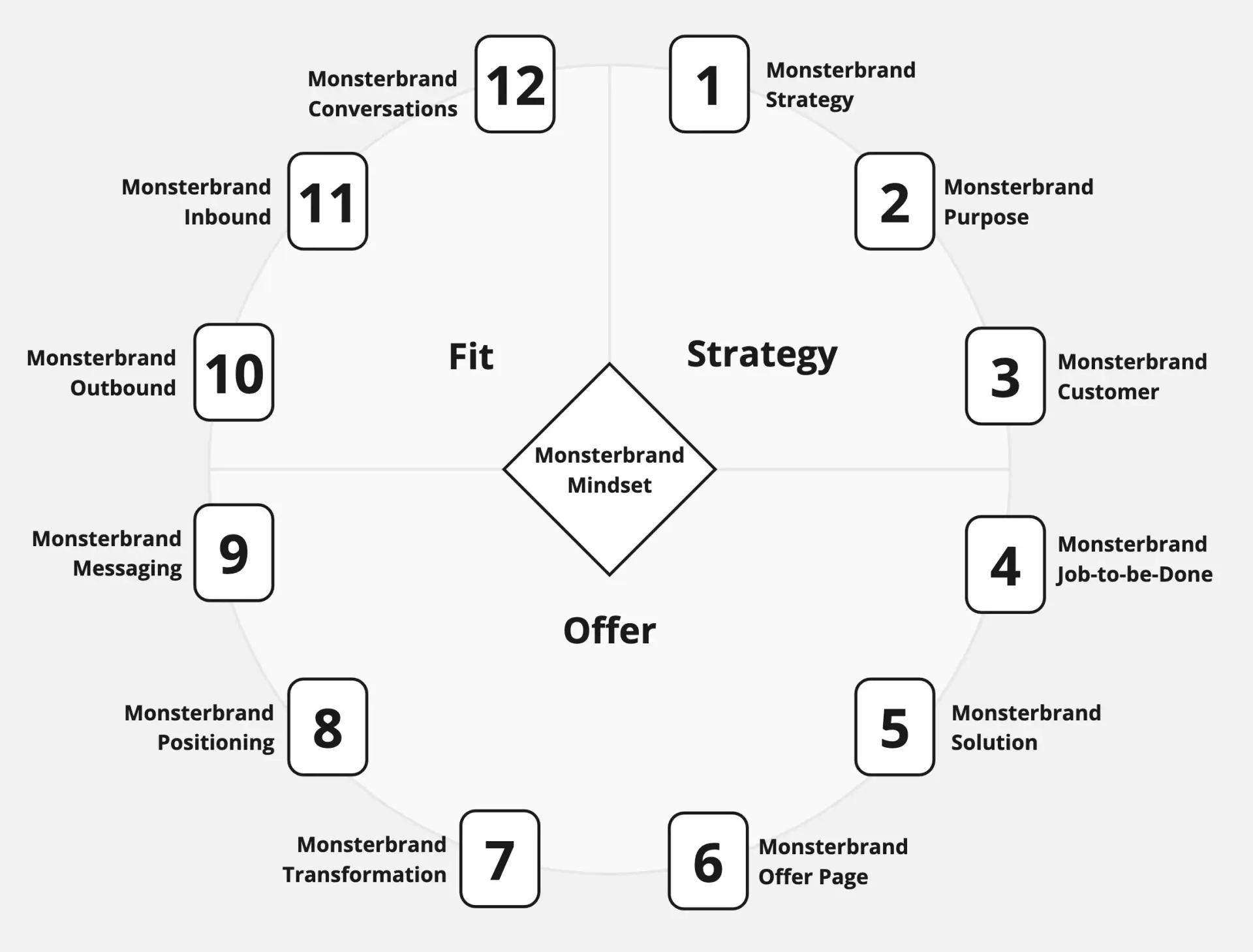
MonsterBrand starts with mindset, sharpens through strategy and offer, then earns its right to scale through fit.
Books
Book 1
Book 1
See the market clearly, choose the right customer, define the real problem, and stop lying to yourself.
Book 2
Book 2
Turn customer truth into an offer people understand, value, and will pay for.
Book 3
Book 3
Test whether the market cares, create movement, and earn fit through action.
Book 4
Book 4
Build the repeatable engine that can survive beyond founder-led selling.
Book 5
Book 5
Navigate the plateaus that come after fit: partnerships, channels, and strategic positioning.
Published now
I did not come to the idea of being a monster from literary theory. I came to it from failure.
Read chapterThe early monster is ugly. It is awkward to explain. The offer is fuzzy. The product is incomplete. The positioning is soft. The promise is too broad or too weak. People do not fully unde...
Read chapterYou have hunted truth. You have taken the ugly thing into the market and forced contact with reality. You have started to hear real signals — who cares, who does not, what lands, what fal...
Read chapterPurpose is not what you feel. It is not your mission statement, your values, or your founder story. Those might be sincere. They are not purpose in the sense that matters to building a re...
Read chapterMost founders describe their customer wrong. They describe someone they wish existed, not someone they can actually find and win.
Read chapterI once built a company that tried to solve six problems at once. We had identified our customer — that part was clear. We had done the work of customer selection right. But when we got cl...
Read chapter